International Committee Members

International Committee Members

Learn more about the International Scientific Committee. Who are its members, What are their missions?

Presidency
President of the International Scientific Committee : Prof. Jean-Jacques Hublin


JEAN-JACQUES HUBLIN


Jean-Jacques Hublin, born on November 30, 1953 in Algeria, is a French citizen. After a career at the CNRS, he joined higher education as a professor at the University of Bordeaux (1999–2004). He also taught at the University of California, Berkeley (1992), Harvard University (1997), Stanford University (1999 and 2011), and Leiden University (2010–2020). In 2004, Professor Hublin created and directed the Department of Human Evolution at the Max Planck Institute for Evolutionary Anthropology in Leipzig. Since 2021, he has been a professor at the Collège de France, holding the chair in Paleoanthropology. Jean-Jacques Hublin is the co-founder of the European Society for the Study of Human Evolution (ESHE), where he served as president from 2011 to 2020. He was a pioneer in the development of virtual paleoanthropology. The evolution of Neanderthals and the mechanisms of our species’ expansion across the globe have been central to his career. He has also devoted many studies to brain evolution and to growth and development in hominins. To explore these questions, he conducted fieldwork in Europe and North Africa and has published over 350 scientific papers. He is a Knight of the Legion of Honour and was awarded the Royal Wissam al-Kafaa al-Fikria by H.M. Mohammed VI. Among other distinctions, he received the International Fyssen Prize in 2021 and the Balzan Prize in 2023.
 
Our Former President : Professor Yves Coppens
The entire team is deeply saddened by the passing of Professor Yves Coppens, President of the International Scientific Committee of the Museum of Prehistoric Anthropology of Monaco, founded by Prince Albert I.
All our thoughts are with his family, the scientific community, and the public.
“Thank you, Godfather, for everything you have done for the Museum, its programs, and its team. You will always remain with us in our hearts and our actions.”
 

Yves COPPENS

Président du Comité scientifique international du Musée d’Anthropologie préhistorique.
Professeur au Muséum National d’Histoire naturelle (Anthropologie), de 1980 à 1983.
Professeur au Collège de France (Paléoanthropologie et préhistoire) de 1983 à 2005.

Committee Members
Sovereign Ordinance No. 11,371 of 17 July 2025 appointing the members of the International Scientific Committee of the Museum of Prehistoric Anthropology of Monaco.


carte cs


Bouton personnalisé
Label du bouton: LINK

Url du bouton: https://journaldemonaco.gouv.mc/Journaux/2025/Journal-8757/Ordonnance-Souveraine-n-11.371-du-17-juillet-2025-portant-nomination-des-membres-du-Comite-Scientifique-International-du-Musee-d-Anthropologie-Prehistorique-de-Monaco

Ouverture du lien: _self

Style du bouton: default

Afficher l'icône:

Position de l'icône: left

Position du bouton: center

Director Juan-Luis ARSUAGA

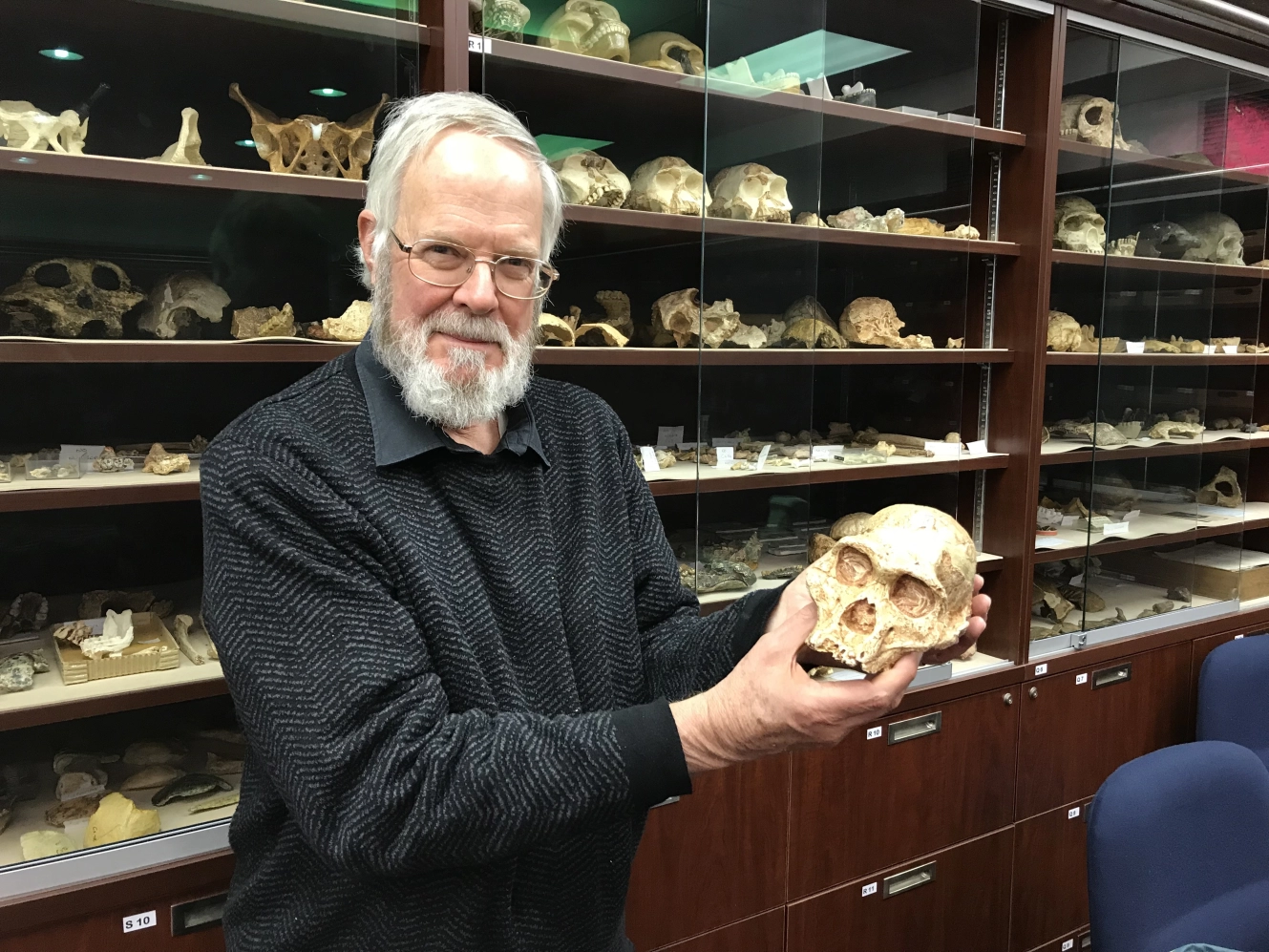
Professor Francis Thackeray is a South African palaeoanthropologist with a PhD in Anthropology from Yale University. He obtained degrees in Archaeology, Zoology, and Environmental Studies from University of Cape Town. In Pretoria, he served as Director of the Transvaal Museum (now known as the Ditsong National Museum of Natural History). Subsequently, in Johannesburg, he was Director of the Institute for Human Evolution at University of the Witwatersrand (Wits). He is currently an Honorary Research Associate of the Evolutionary Studies Institute at the University of the Witwatersrand. Together with French and South African collaborators, he is part of the KRP Research Project, focusing on the Plio-Pleistocene hominin cave site of Kromdraai, located in the Cradle of Humankind, which has been declared a UNESCO World Heritage Site.

prof francis


Professor Gi-Dong BAE. Professor Emeritus. Hanyang University. Professor Emeritus Kidong Bae studied Archaeology and Anthropology at Seoul National University in Korea and obtained his Ph.D. from the Department of Anthropology at University of California, Berkeley in 1988. He has conducted archaeological research in Tanzania, Iran, Malaysia, Nepal, and other Asian countries, as well as in Korea. He also initiated a new community movement dedicated to the protection and preservation of prehistoric sites, launched during the International Prehistoric Festival held at the Chongok Paleolithic site in Korea in 1992. His main research interests focus on the evolution of Paleolithic cultures and human dispersal into East Asia. Currently : Director of the Institute of East Asian Archaeology. Board Member of the Academy of International Pre- and Proto-historic Archaeology (AIPP). Chair of the Board of the Gahyun Cultural Foundation. Honorary Chair of ICOM ASPAC (International Council of Museums – Asia-Pacific Alliance). Formerly : Director General of the National Museum of Korea (2017–2020). Director of the Chongok Prehistory Museum (2010–2015). President of the National University of Cultural Heritage of Korea (2009–2010). Chair of the Board of UNESCO APCEIU. Chairperson of ICOM ASPAC (2016–2022). President of the Korea Museum Association (2007–2009). Selection of Recent Book Publications : Human Evolution and Paleolithic Culture in Asia, Hanyang University Press, 2021 (Korean). Chongoknian, Korean Version of Acheulean Handaxe, Jininjin Press, 2024 (Korean and English). Birth of the Chongok Prehistory Museum, 30 Years of History of the Chongok Prehistoric Festival 1993–2022, Chongok Prehistory Museum, 2022 (Korean). Chief Editor, Current Studies of Patterns and Diversity of World Prehistory, Institute of Korean Prehistory, 2025. Awards and Honors : Most Distinguished Museum Professional Award by ICOM ASPAC (2025). Suyanggae Academic Award (2015). Honorary title of Paiknam Erudite Professor from Hanyang University (2015). Sambul Kim Wonyong Academic Award (2017). Wihae Academic Award for Quaternary Studies (2008). Most Distinguished Professor Award from Hanyang University (2000). 

profbae


Professor Stefano Benazzi : Professor at the University of Bologna. Stefano Benazzi, born on 11 August 1977, is an Italian physical anthropologist and paleoanthropologist. He is Full Professor at the Department of Cultural Heritage of the University of Bologna, where he teaches paleoanthropology and osteoarchaeology. After completing his degree and PhD in Anthropology at the University of Bologna, he pursued postdoctoral research at the Senckenberg Research Institute in Frankfurt, the University of Vienna, and the Department of Human Evolution of the Max Planck Institute for Evolutionary Anthropology in Leipzig. In 2017, he founded and currently directs the BONES Lab — Laboratory of Osteoarchaeology and Paleoanthropology — at the University of Bologna, a research centre dedicated to the study of human evolution through the integration of osteoarchaeology, advanced digital methods, histology, biomechanics, and paleoproteomics. His research focuses on human skeletal remains from archaeological contexts, with particular attention to the origin and dispersal of Homo sapiens across Eurasia, the biocultural processes that shaped our species, and the mechanisms underlying the disappearance of other human groups, especially the Neanderthals. Strongly engaged in fieldwork and international scientific collaborations, Professor Benazzi has directed or co-directed archaeological and paleoanthropological projects in Italy, Oman, and South America. His research also extends to Eastern and Southeastern Europe, as well as Western and Central Asia, where he participates in multidisciplinary programmes combining archaeological excavation, laboratory analyses, and the training of young researchers. Professor Benazzi has been awarded major national and international research grants, including the ERC Consolidator Grant SUCCESS in 2016 and the ERC Synergy Grant LAST NEANDERTHALS in 2023. Through numerous scientific publications, he has contributed to the renewal of paleoanthropology by applying advanced digital methods to the study of the human fossil record. In 2024, he received the Fabio Frassetto International Prize for Paleoanthropology.

profbenazzi


Professor Abdeljalil Bouzouggar : Abdeljalil Bouzouggar is currently Director of the National Institute of Archaeology and Heritage Sciences in Morocco. He holds a PhD in Prehistory and Quaternary Geology from Bordeaux I University in France and a PhD in Archaeology from the University of Liège in Belgium. He joined the National Institute of Archaeology and Heritage Sciences (INSAP) in 1998 as a research fellow and has been a full professor since 2018. He served as Head of the Department of Prehistory at INSAP from 2009 to 2013 and leads the scientific team “Origin and Evolution of Homo sapiens Cultures in Morocco.” From 2009 to 2021, he was an associate researcher at the Department of Human Evolution of the Max Planck Institute in Leipzig. He is co-founder and current president of the “North Africa” commission of the International Union of Prehistoric and Protohistoric Sciences (UISPP). He has also been an associate researcher at the Mediterranean Laboratory of Prehistory Europe Africa (CNRS and Aix-Marseille University) since 2013, a former resident at the Mediterranean Institute for Advanced Studies (IMéRA) in Marseille (September 2014 – February 2015), and an associate director of studies at the Maison des Sciences de l’Homme in Paris (2015). Abdeljalil Bouzouggar leads several archaeological excavation projects in Morocco on the North African Middle Stone Age (MSA) and the MSA–Later Stone Age transition. His research focuses on key Moroccan sites including Taforalt Cave, Rhafas, El Mnasra (Contrebandiers), Dar es Soltane 1, and Bizmoune. He has shown a strong interest in MSA lithic assemblages and the emergence of symbolic behavior in North Africa. He is the author of numerous articles published in international scientific journals.

abdelj


Doctor Philippe CHARLIER


Professor Fahu CHEN

Professor Jean Guilaine has spent a large part of his career at the CNRS (Centre National de la Recherche Scientifique), which he left in 1993 with the rank of Director of Research, Exceptional Class. At the same time, he held the position of Director of Studies at the École des Hautes Études en Sciences Sociales, where he had been elected in 1978 to a chair entitled “Neolithisation and the First Farming Societies.” From 1985 to 1989, he was also appointed General Inspector of Archaeology at the French Ministry of Culture. In 1994, he was elected Professor at the Collège de France, where he held a chair entitled “The Civilizations of Europe in the Neolithic and the Bronze Age”, periods that had never previously been taught as a specific field at this institution. In 2011, he was elected member of the Académie des Inscriptions et Belles-Lettres. He has received numerous awards, including the Grand Prix de l’Archéologie from the French Ministry of Culture, and more recently the 2025 Shanghai Archaeological Forum Research Award. He is a corresponding member of the Royal Spanish Academy of History in Madrid and of the Istituto Italiano di Preistoria e Protostoria. He is also Doctor Honoris Causa of the universities of Barcelona and Lisbon. His fieldwork has covered the entire Mediterranean basin, focusing on the processes of Neolithisation, including : Cyprus (Shillourokambos, Klimonas), Greece (Sidari), Southern Italy (Torre Sabea, Trasano I), Southern France (Pont-de-Roque-Haute, Leucate-Corrège, Abri Jean-Cros, Gazel and Montbolo caves), Andorra (Margineda), Spain (El Toll). He has also worked on Chalcolithic sites in Southern Italy (Trasano 2) and France (Rocher-du-Causse, Roquemengarde, Véraza). He has published research on the major megalithic monuments of Mediterranean France, including the hypogea of Arles and the dolmens of Pépieux and Saint-Eugène. His research on the Metal Ages has focused on the major site of Carsac and on the Bronze Age hoards of Launac and Rochelongue. He has also addressed broader theoretical issues concerning the Neolithisation of the Mediterranean and Europe, prehistoric violence, the development of social inequalities, the Bell Beaker culture, the rhythms of Mediterranean Protohistory, and agrarian archaeology. His extensive written work includes numerous site monographs as well as major synthetic studies, among them : La France d’avant la France (1980). La Mer partagée (1994). Le Sentier de la guerre (2001). Caïn, Abel, Ötzi. L’héritage néolithique (2011). Les Chemins de la Protohistoire (2017). Femmes d’hier (2025). He is the author of more than 900 scientific articles published in French and international journals.

profguilaine


Professor Dominique Cliquet was born on February 22, 1957, in Caen, France. Until July 2024, he served as Heritage Curator at the Regional Archaeology Service of Normandy (Ministry of Culture). After an atypical career path — mechanical construction technician, studies in history in Caen, and art history and archaeology in Paris — he joined the Évreux Museum in 1982 as curator in charge of archaeological collections. Beginning in 1995, he taught early prehistory at the École du Louvre and has devoted himself to the study of the first settlements of northwestern Europe since the 1970s. A specialist in the Lower and Middle Paleolithic, he focuses on the earliest settlements in Normandy, notably through the creation of the Collective Research Project “The First Humans in Normandy” in 2001, followed by the thematic survey “The First Settlements of Normandy” in 2018. He studies the lifestyles of hunter-gatherers within their environments, site functions, territoriality, and the formation of human groups. A student of the pale ethnologist Gérard Fosse, he assisted him during excavations at several sites, including Épouville / Briqueterie Dupray (Seine-Maritime; 1975 & 1976) and Saint-Vaast-la-Hougue / Le Fort (Manche; 1978), before directing his own excavations from 1980 onward, beginning with the Saint-Germain-des-Vaux / Port-Racine site (1980–1985). Major sites include Saint-Pierre-lès-Elbeuf (2004–2007 & 2011–2012), Ranville (2000–2002), Tourville-la-Rivière / La Fosse-Marmitaine (2008), Saint-Nicolas-d’Attez / La Madeleine (1994), Grossœuvre / Le Vieux-Moulin (1995 & 1996), Saint-Brice-sous-Rânes / La Bruyère (since 1998), and especially Le Rozel / Le Pou (since 2012). Now retired and volunteering within the SOSNeanderozel Association, he continues to coordinate the thematic survey “The First Settlements of Normandy” and direct excavations at the Le Pou site in Le Rozel. At the same time, in close collaboration with Jean-Pierre Coutard, he is preparing several syntheses on Paleolithic occupations in Normandy. The first volume, “The Environments of Pleistocene Human Occupations in Normandy (France) and the Channel Islands in Their Chronological Context,” was published in 2023 by the Presses Universitaires de Liège, ERAUL 145, 404 pages.

dominik


Professor Ottmar KULLMER is a geologist, paleontologist, and paleoanthropologist. He received his Dr. rer. nat. degree in palaeontology and geology in 1997 from the Faculty of Geosciences at Johannes Gutenberg University Mainz, Germany. His strong interest in academic teaching led him to obtain a venia legendi in 2014 and to his appointment as Adjunct Professor of Zoology in 2022 at the Faculty of Biosciences of Goethe University Frankfurt. Since 2001, Ottmar Kullmer has been employed as a researcher and curator at the Senckenberg Leibniz Institution for Biodiversity and Earth System Research (SGN), at the Senckenberg Research Institute and Natural History Museum Frankfurt, where he has been Head of the Division of Paleoanthropology since 2016. Today, his research interests and academic teaching cover a wide range of topics, from general mammalian palaeobiology and evolution to paleoanthropology, as well as numerous related fields involving structural and chemical analyses of bone and dental hard tissues. His research focuses on evolution and functional morphology, with particular emphasis on evolutionary dynamics, dietary adaptations, and cultural adaptations in hominids. Several of his national and international research projects, funded by the German Research Foundation (DFG) and the European Union, have led to the development of the internationally recognized Occlusal Fingerprint Analysis (OFA), a virtual method for quantifying and functionally comparing dental macro-wear patterns on teeth. As part of his research on human evolution, he has been involved since 1992 in numerous field surveys and excavation projects in Europe and Eastern Africa. Research interests: human evolution, hominid paleoecology and paleobiogeography, mammalian paleobiology, paleodiet, life history reconstructions, virtual anthropology, evolutionary dentistry, dental wear, functional morphology and biomechanics of hard tissues, digital morphometry of bones and teeth. Publications: He is the author and co-author of more than 120 publications in leading international multidisciplinary journals such as Nature, Nature Communications, Nature Ecology & Evolution, and PNAS, as well as in the most important journals in the fields of paleoanthropology and archaeology, including the Journal of Human Evolution, the American Journal of Biological Anthropology, and the Journal of Archaeological Science.

KULLMER


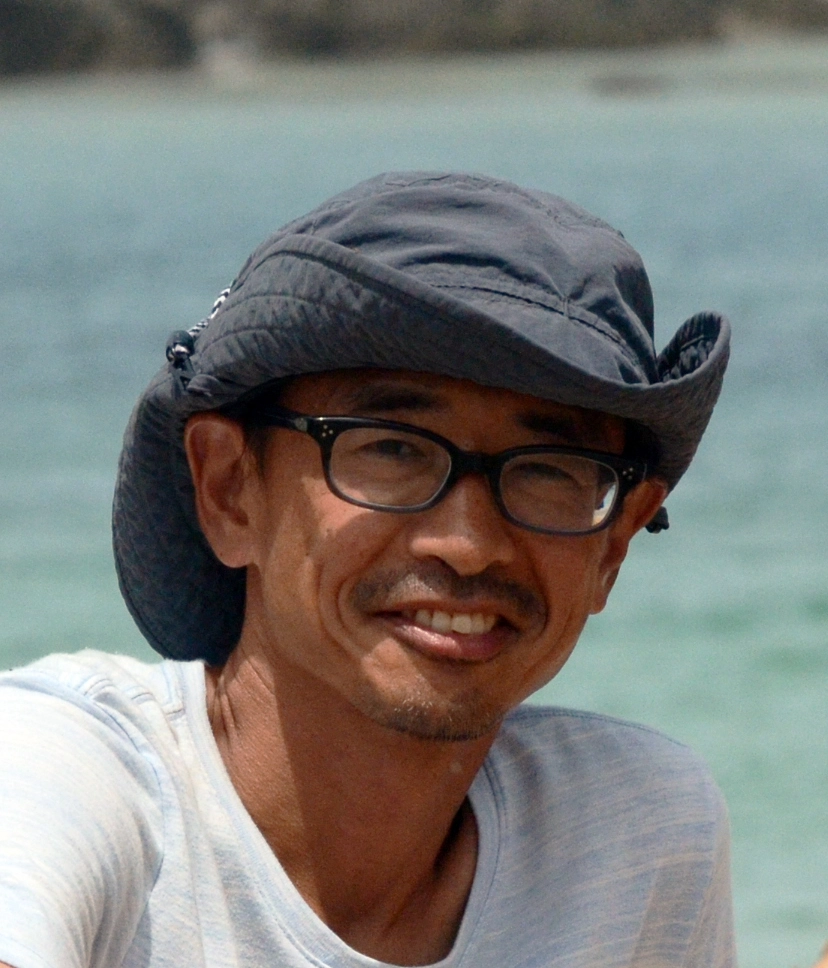
Professor Yousuke Kaifu : University Museum, The University of Tokyo. Professor Yousuke Kaifu (born 1969) is a biological anthropologist specializing in human evolution in Asia. He is a professor at the University Museum, University of Tokyo, where he studies fossils of Homo erectus, Homo floresiensis, and early Homo sapiens, focusing on evolutionary change, human biological diversity, and the development of humanity. Professor Kaifu frequently collaborates with specialists from other fields, including archaeology, primatology, and Quaternary science, contributing to a multidisciplinary understanding of human evolutionary history and behavioral change. From 2016 to 2019, while working as a researcher at the National Museum of Nature and Science, Tokyo, he carried out an experimental voyaging project aimed at unraveling the mysteries of Paleolithic sea crossings in East Asia.

prof kaifu


Professor Jacques JAUBERT


Professor Henry de Lumley : Emeritus Professor at the National Museum of Natural History in Paris and former President of the IPH


Professor Fabio NEGRINO is Associate Professor of Prehistory and Protohistory at the University of Genoa (Italy). His research focuses on hunter-gatherer societies and the first agro-pastoral communities, from the Palaeolithic to the Copper Age, with particular attention to lithic industries, the exploitation of siliceous raw materials, human adaptations, and the relationships between Neanderthals and the first Homo sapiens. He has directed numerous archaeological excavations in north-western Italy, particularly at the sites of Riparo Bombrini, Arma Veirana, Arene Candide, and Arma delle Manie. He also participates in several international research projects funded by the European Research Council (ERC) and other scientific institutions. He has been Co-Principal Investigator of research projects funded by the Social Sciences and Humanities Research Council of Canada (SSHRC) and by the Italian PRIN programme of the Ministry of University and Research. He has also taken part in archaeological missions in Pakistan and Oman dedicated to the study of prehistoric and protohistoric societies, from the Palaeolithic to the Iron Age. Author of nearly 200 scientific publications, he combines field archaeology, technological analysis, archaeometry, and interdisciplinary approaches to better understand the dynamics of cultural change over the long term.

fabio


Professor Hélène Roche : Research Director, Maison de l’Archéologie et de l’Ethnologie, University of Paris Nanterre


Doctor Suzanne SIMONE : Monegasque prehistorian and lexicographer. She served as Director of the Museum of Prehistoric Anthropology of Monaco from 1975 to 2003.


Director TIKHONOV Alexei : Candidate of Biological Sciences (PhD), Leading Researcher. Tikhonov Alexey Nikolaevich was Born in 1959, he studied at Kazan State University from 1977 to 1980. In 1983, he graduated from the Faculty of Biology and Soil Sciences of Leningrad State University (Department of Vertebrate Zoology). Since 1982, he has worked at the Zoological Institute of the Russian Academy of Sciences. From 2006 to 2016, he served as Deputy Director for Scientific Research, and from 2007 to 2020, he was Head of the Zoological Museum of Saint Petersburg. Since 2009, he has also been a Leading Researcher at the Mammoth Museum NEFU (North-Eastern Federal University, Yakutsk). Since 1999, he has been Scientific Secretary of the Mammoth Committee of the Russian Academy of Sciences. Since 2010, he has been a certified expert in cultural heritage (paleontology) accredited by the Ministry of Culture of the Russian Federation. His research focuses on : taxonomy, morphology, and zoogeography of extant and extinct ungulates and proboscideans / paleoecology of Eurasian mammals at the transition from the Pleistocene to the Holocene / extinction patterns of Pleistocene fauna in Northern Eurasia / systematics and phylogeny of artiodactyls (especially bovids) and proboscideans / Quaternary paleontology, particularly mammoths and mammoth fauna of northern Siberia. As an expert, he has conducted numerous analyses of fossil animal remains, including mammoth skeletons and tusks. He has led 5 research projects, including 5 international ones, and has trained 12 zoologists and paleontologists. He has organized and participated in more than 30 scientific expeditions in Russia and abroad with international collaborators. He has also contributed to 12 international exhibitions. He actively disseminates his research in the media and has participated in 9 documentary films produced by leading television networks worldwide.

profthionov


Doctor Patrick SIMON


Professor Alemseged ZERESENAY “Zeray” was born in Ethiopia on June 4, 1969, and is an American citizen. He is the Donald N. Pritzker Professor of Organismal Biology and Anatomy at the University of Chicago, where he teaches and conducts research in the fields of paleoanthropology and human evolution. He is best known for the discovery of Selam (the “Dikika Child”), an exceptionally complete juvenile skeleton of Australopithecus afarensis, often described as the world’s oldest known child. His team’s research has also uncovered some of the earliest evidence of stone tool use, dating back to 3.4 million years ago, significantly extending the archaeological record. Professor Alemseged is the founder and director of the Dikika Research Project and the Mille-Logya Project. He is also a co-founder of the East African Association for Paleoanthropology and Paleontology, an organization that promotes scientific collaboration and engagement with policymakers across Africa. His work has been widely featured in major international media, including CNN, BBC, TED, and NOVA. He has received numerous honors, including election to the American Academy of Arts and Sciences, the American Association for the Advancement of Science, the Pontifical Academy of Sciences, and the Ethiopian Academy of Sciences.

zerzay